
helping you breathe freely and improve your quality of life.
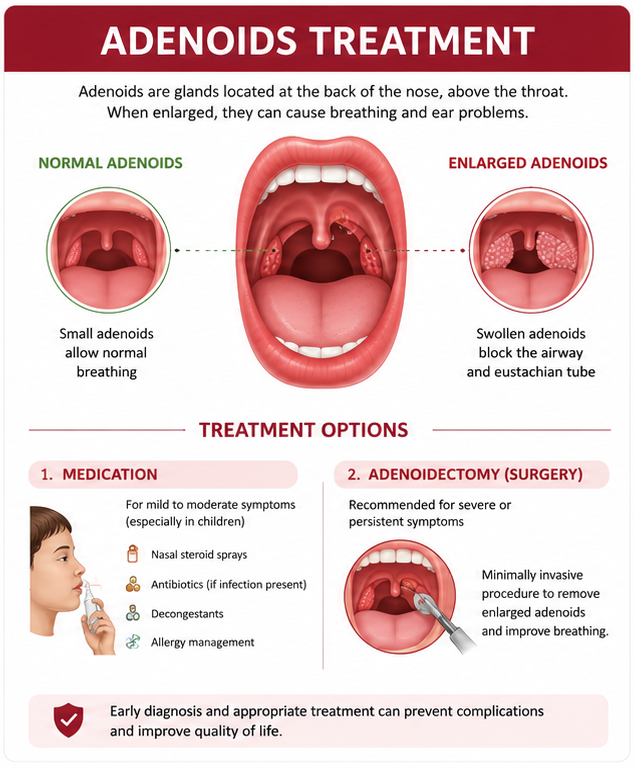
Adenoids are lymphoid glands located at the back of the nose, near the top of the throat, playing a vital role in your immune system by preventing and fighting infections. Similar to tonsils, adenoids can enlarge due to infections or allergies, leading to symptoms such as nasal congestion, difficulty breathing, snoring, or recurrent ear infections. While adenoids are not visible externally, their enlargement can significantly impact your health.
At PaksEnt Hospital, we offer comprehensive adenoid treatment tailored to your specific needs. Treatment options range from careful observation and medication to nasal sprays, and in more severe cases, surgical removal through adenoidectomy. Trust our experienced ENT specialists to provide expert care, helping you breathe freely and improve your quality of life. Book a consultation today for effective adenoid management
If enlarged adenoids are not causing significant symptoms, our healthcare providers may recommend a watch-and-wait approach, monitoring the condition closely without immediate intervention. This conservative management allows us to assess whether symptoms resolve on their own or require further treatment.
For cases where adenoid enlargement is associated with bacterial or viral infections, antibiotics or antiviral medications may be prescribed. This approach helps reduce inflammation and treat underlying infections, alleviating symptoms effectively.
Steroid nasal sprays are often recommended to decrease inflammation of the adenoids. These sprays can effectively relieve symptoms such as nasal congestion, improve airflow, and reduce swelling, providing relief without surgery in many cases.
When enlarged adenoids cause persistent or severe symptoms—such as breathing difficulties, frequent ear infections, or sleep disturbances—surgical removal through adenoidectomy may be necessary. This procedure can significantly improve quality of life by restoring normal breathing, reducing infections, and alleviating sleep-related issues.
Adenoidectomy offers numerous benefits for individuals suffering from symptoms caused by enlarged or infected adenoids:
The decision to undergo adenoid surgery is personalized, based on your specific symptoms and medical history. Our experienced ENT specialists conduct comprehensive assessments and discuss all available options with patients and their families—especially in pediatric cases—to ensure the best outcomes.
Adenotonsillectomy involves the surgical removal of both the adenoids and tonsils. This procedure is often recommended for recurrent infections, sleep apnea, or other upper respiratory issues, particularly in children. Our experts tailor the approach based on individual needs to promote optimal recovery and health.
Adenoidectomy is typically performed under general anesthesia, especially in children, ensuring the patient remains unconscious and pain-free throughout the procedure.
The patient lies in a supine position on the operating table to facilitate access to the nasal and throat areas.
Using specialized instruments such as curettes or suction devices, the surgeon carefully visualizes and removes the enlarged adenoid tissue, ensuring complete removal while minimizing trauma.
Any bleeding during the procedure is controlled using electrocautery or other techniques to promote healing and prevent complications.
Postoperative analgesics are administered to manage discomfort and support a smooth recovery process.
Patients may be advised to limit physical activities temporarily, allowing proper healing and reducing the risk of complications.
Got a question? We've got answers. If you have some other questions, see our support center.